(Part 3 of 5 of our January Seasonal series)
Keywords: subway pollution hair damage, NYC subway hair protection, metal buildup hair protection
How to Protect Your Hair From Subway Pollution
(Part 3 of 5 of our January Winter Hair Rehab mini-series)
Keywords: NYC subway pollution hair, protect hair from pollution NYC, chelation treatment NYC, prevent brassiness and dullness
Hair N’ Now NYC | Because You’re Smart
New York teaches efficiency early.
You walk fast.
You multitask harder.
You take the subway because it makes sense.
It saves time.
It saves money.
It saves the planet.
Your hair, however, did not sign up.
Somewhere between the turnstile and the platform, things change.
Color looks off.
Texture feels tired.
Shine disappears quietly.
By the time you reach street level, your hair feels… negotiated with.
This is not imagination.
It is exposure.
NYC subways contain a unique mix of pollution.
Metal dust.
Fine particles.
Chemical residue.
Unlike street pollution, it concentrates underground.
And your hair absorbs it daily.
At Hair N’ Now NYC, we see the pattern clearly.
Professionally dressed women.
Healthy routines.
Consistent salon visits.
Still wondering why their color shifts.
Why curls lose definition.
Why hair suddenly feels brittle.
This article explains what subway pollution does to hair.
Why it causes brassy tones and dullness.
And how to protect your hair intelligently.
Because smart women adapt.
Even underground.
Why NYC Subways Are Brutal on Your Hair
(Or: The Planet Thanks You. Your Hair Files a Complaint.)
New York subways are engineering marvels.
They are also pollution chambers.
Unlike outdoor pollution, subway pollution concentrates underground.
Ventilation is limited.
Trains create friction.
Particles circulate repeatedly.
Your hair becomes an air filter.
A stylish one.
But still a filter.
What Makes Subway Pollution Different
| Subway Pollutant | What it Does to Your Hair |
|---|---|
| Metallic dust | Causes brassiness, dullness, brittleness |
| PM2.5 particles | Can weaken hair proteins and overall structure over time |
| Tunnel soot | Blocks hydration and treatment absorption |
| Chemical pollutants | May trigger scalp irritation and inflammation |
Your scalp and strands absorb everything.
Especially during daily commutes.
Sources confirm this is measurable.
And significant.
Sources & Professional Consensus
This article aligns with findings and consensus from:
- r/HaircareScience (Reddit)
- Quora (Dermatologists & Trichologists)
- Modern Salon
- American Salon
- Vogue Beauty
- Elle Beauty
- InStyle Beauty
- NIH / PubMed
- NYU Langone Health (research & reporting)
Professional cosmetology education and trichology training also support that concentrated urban pollution can impact hair and scalp comfort over time.
Metallic Dust: The Brassy Color Culprit
The most unique subway pollutant is metallic dust.
It comes from train wheels and braking systems.
These particles are microscopic.
They are also persistent.
What’s In That Dust
- Iron
- Manganese
- Chromium
These metals cling to hair fibers.
They oxidize with heat and moisture.
They alter color perception.
That orange tone appears suddenly.
Especially on lightened or gray hair.
Hair feels rough.
Ends feel dry.
Color looks tired.
This is not poor color work.
It is chemistry.
PM2.5: Tiny Particles, Big Damage
PM2.5 particles are extremely small.
They penetrate deeply.
PM2.5 particle levels in NYC subways can exceed typical outdoor levels by a wide margin, depending on station and ventilation conditions.
Your scalp’s natural oils attract them.
Sebum becomes a magnet.
Once attached, they roughen the cuticle over time.
Protein bonds can weaken.
Hair loses strength and flexibility.
This damage is cumulative.
Daily exposure matters.
River Tunnel Stations: The Worst Offenders
Stations near underwater tunnels can trap pollution.
Air recirculates poorly.
Moving trains push debris forward.
This creates dense exposure clouds.
Hair treatments struggle noting through afterward.
Hydration becomes blocked.
Repair stalls.
If your color never looks fresh anymore, notice your station.
Oxidative Stress: The Silent Saboteur
Subway air contains reactive chemicals.
They create oxidative stress.
This affects strands and scalp.
Scalp Consequences
- Follicle congestion
- Itching
- Dandruff
- Irritation and inflammation
Long-Term Effects
- Increased shedding
- Weakened growth cycles
- Thinning over time (for some people)
Hair does not always recover alone.
It often needs targeted intervention.
How Subway Pollution Affects Different Hair Structures
(It’s About Porosity, Not Personality)
Subway pollution does not affect all hair equally.
Hair structure matters.
Porosity matters more.
NYC subway air contains dense PM2.5 particles.
Many are rich in iron from rail abrasion.
These particles can contribute to oxidative stress.
They cling.
They oxidize.
They weaken hair fibers over time.
How much pollution your hair collects depends on two things:
Surface area.
Cuticle openness.
Let’s break it down:
Effects of Subway Pollution on Different Hair Structures
Because hair reacts to the city differently, depending on how it’s built.
| Hair Structure | Accumulation in Your Hair | Impact on Your Hair |
|---|---|---|
| Straight / Low Texture | Smoother cuticle can limit deep penetration. Fine particles coat the surface evenly rather than lodging deeply inside the strand. | Dullness and limpness show up fast. Roots may feel weighed down. Surface buildup can alter shine and tone but is usually easier to remove with the right cleanse. |
| Wavy / Loose Pattern | More surface area from bends and waves creates extra adhesion points for particulate matter and metal dust. | Gradual dullness, rougher texture, and rising dryness. Frizz can become harder to control as the cuticle gets stressed over time. |
| Curly / Spiral | Often higher porosity and raised cuticle layers can trap pollutants within curves. Frizz-control products may attract additional particles. | More frizz, dryness, and breakage risk. Reduced elasticity and definition may show up with repeated exposure. |
| Coily / Dense | High porosity and density provide extensive surface area and spaces for pollution accumulation. | Dryness and brittleness can accelerate. Scalp congestion may develop without targeted detox and hydration support. |
The Takeaway New Yorkers Appreciate
Subway pollution is democratic.
Damage is not.
Hair structure determines how pollution accumulates.
Porosity determines how deeply it penetrates.
Straight hair shows issues first.
Curly and coily hair suffer more silently.
Then dramatically.
Protection must match structure.
And environment.
Because in New York, exposure is not optional.
Strategy is.
Subway Pollution Hair FAQs
(The Straight Answers Smart New Yorkers Want)
Q: Why does my hair look brassy after subway commutes?
A: Subway air contains metal particles that cling to hair and oxidize. This alters color tone, especially on lightened hair. A professional chelation service helps remove metal buildup and restore true tone without unnecessary stripping.
Q: Is subway pollution worse than street pollution for my hair?
A: Often, yes. Subway pollution concentrates underground with limited ventilation. Fine metal dust and PM2.5 can accumulate on hair more intensely than outdoor pollution, speeding up dullness and tone distortion for daily commuters.
Q: How often should I detox my hair from subway pollution?
A: Many NYC commuters benefit from professional chelation every 4–6 weeks. Frequency depends on commute length, station conditions, hair color level, and styling habits.
Q: Can at-home shampoos remove subway pollution?
A: Most at-home shampoos remove surface grime but don’t fully remove metal/mineral buildup. Chelation is designed to bind and lift those deposits more effectively—especially when brassiness and dullness keep returning.
Q: Does subway pollution affect hair growth?
A: It can contribute by clogging follicles and triggering scalp irritation in some people. Consistent scalp care (and reducing buildup) supports a healthier growth environment.
Q: Does curly hair suffer more from subway pollution?
A: Not “more,” but differently. Pollution can hide within curl patterns and disrupt definition and elasticity. Customized detox + hydration restores curl integrity without flattening volume.
Pro Tips: How to Protect Your Hair From Subway Pollution
Protection requires strategy.
Not scrubbing.
Not guessing.
Rule One: Chelation Matters
Metal buildup requires chelation.
Regular shampoo is often insufficient.
We use professional chelating systems from:
These remove metals safely.
Without stripping color unnecessarily.
Rule Two: Barrier Protection Is Essential
Pollution sticks to compromised cuticles.
We reinforce barriers using:
Barrier repair reduces adhesion.
It preserves shine.
Rule Three: Styling Products Should Shield
Anti-pollution styling matters.
We rely on:
These help create breathable shields.
Without heaviness.
Rule Four: Extensions Need Special Care
MHE Maiden Hair Extensions require targeted protection.
Pollution shortens extension lifespan.
Chelation helps extend it.
We also use DiFiaba Professional systems to keep extensions clean, light, and glossy.
Rule Five: Support From Within
Environmental stress affects follicles.
We often recommend Nutrafol Professional for ongoing support.
It supports resilience internally and complements topical care.
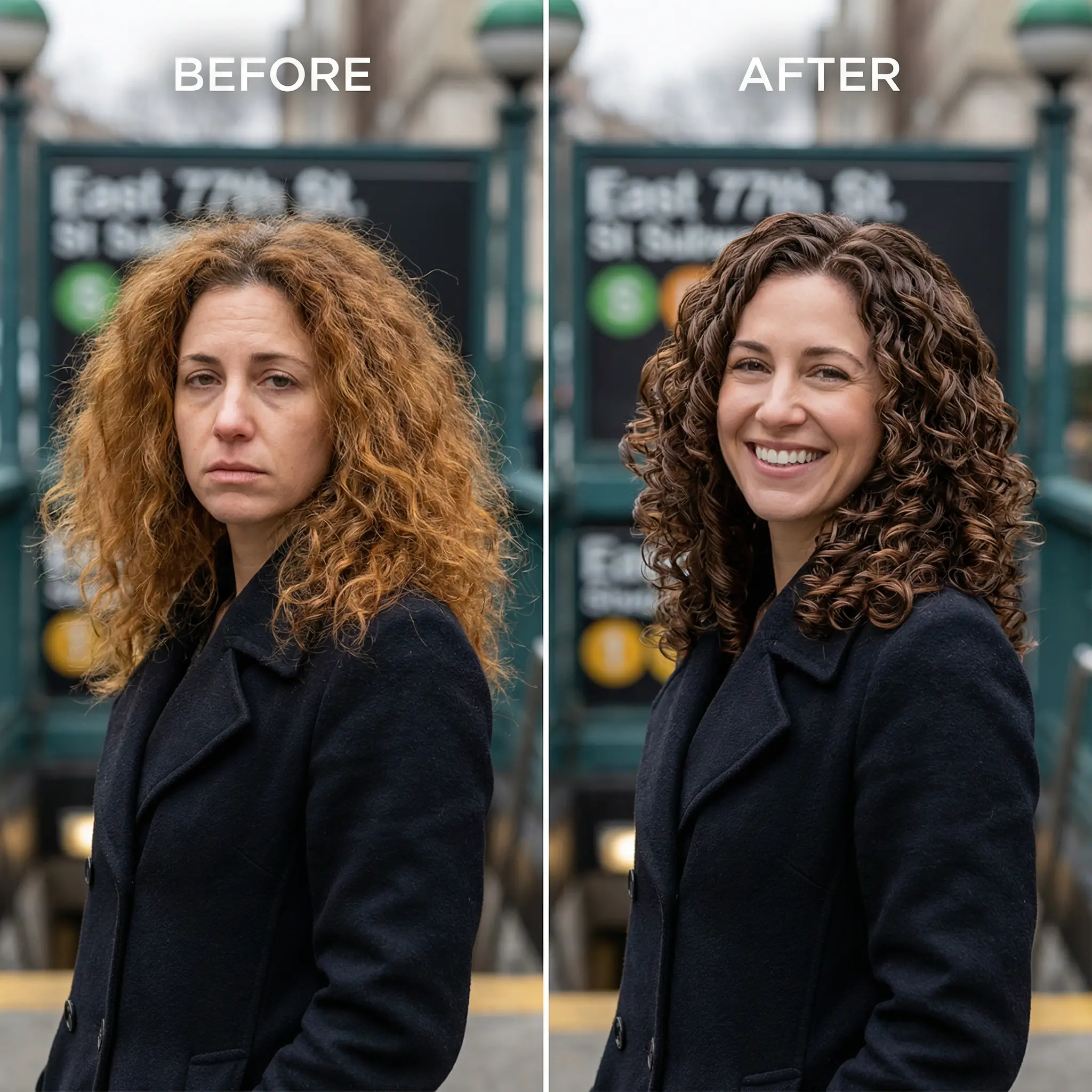
Before-and-After Reality
(Seen Daily at Hair N’ Now NYC)
Before:
Brassy tones.
Dull finish.
Brittle feel.
After:
True color restored.
Balanced shine.
Healthy movement.
This is not magic.
It is correct treatment.
Book Your Complimentary Consultation
Book Online for your
FREE 15-Minute Subway Pollution Hair & Scalp Detox Consultation today.
Or click-to-call (212) 288-4413 to schedule easily.
We pay attention.
We don’t rush.
We do what actually works.
Coming Tuesday, January 13, 2026:
Part 4 of 5 in our January Winter Hair Rehab mini-series:
• How to Repair Heat-Damaged Hair After the Holidays