(#2 in our 4-part August Post-Summer Restoration Diagnostic series)
Keywords: Yorkville chlorine hair damage · Upper East Side hair repair
Hair N’ Now NYC | Your Hair, Revived℠
The Summer Hair Snap
August pool days offer welcome relief from the heat.
Your hair may not appreciate them quite as much.
You might notice more broken hairs during your morning brush.
Your strands may suddenly feel rough, dry, or unusually fragile.
Sometimes, the change seems to happen almost overnight.
You have not changed your styling routine.
Yet your hair behaves differently after several swims.
Many women experiencing Yorkville chlorine hair damage notice this pattern.
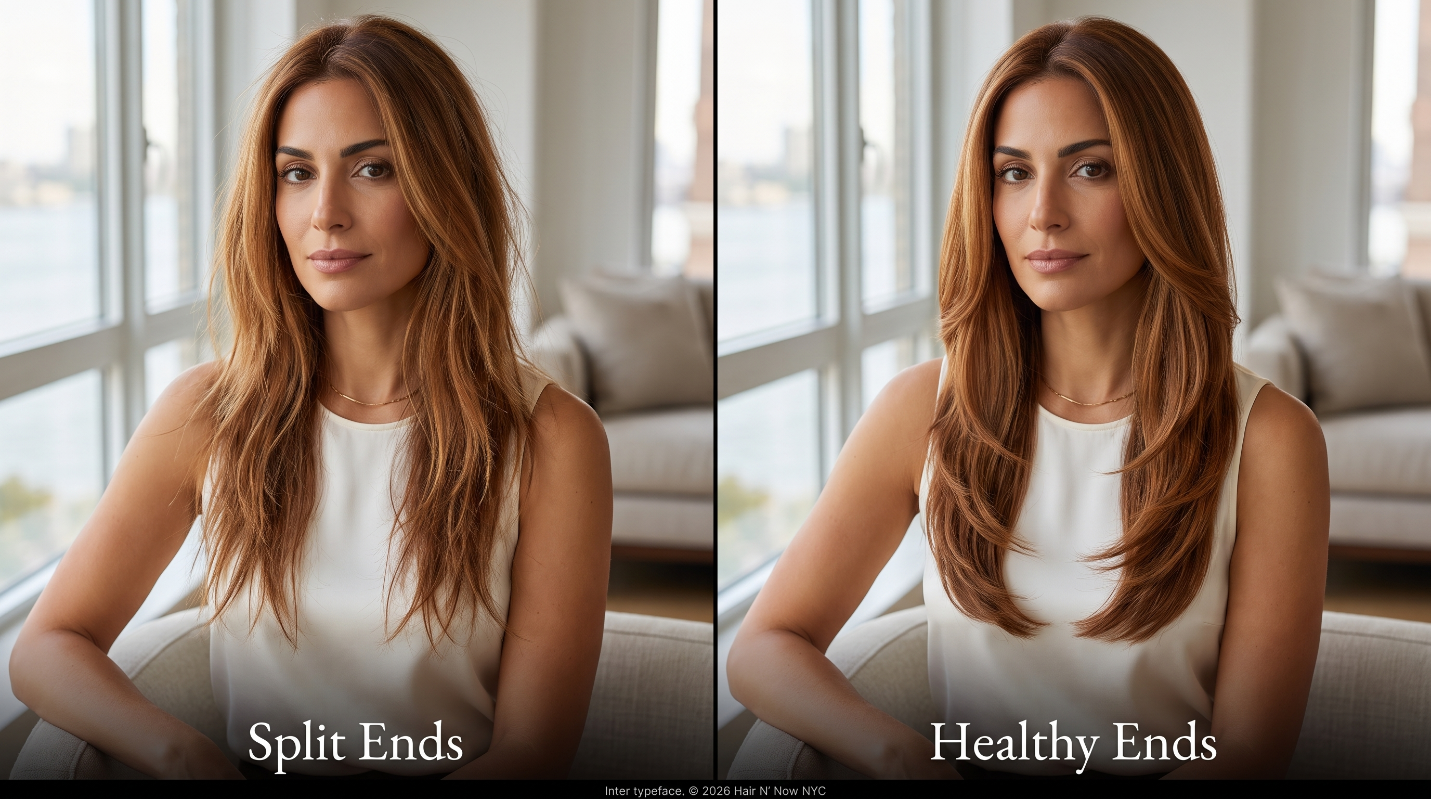
They see shorter broken pieces around their shoulders.
They feel more tangling when brushing or washing.
They may even notice their ends becoming thinner.
This is where Upper East Side hair repair begins.
Not with another product.
It begins with understanding why your hair became vulnerable.
Chlorine Does More Than Dry Hair
Chlorinated pool water can affect several parts of the hair fiber.
One target is the hair’s natural protective lipid layer.
These lipids help maintain the hair’s surface condition.
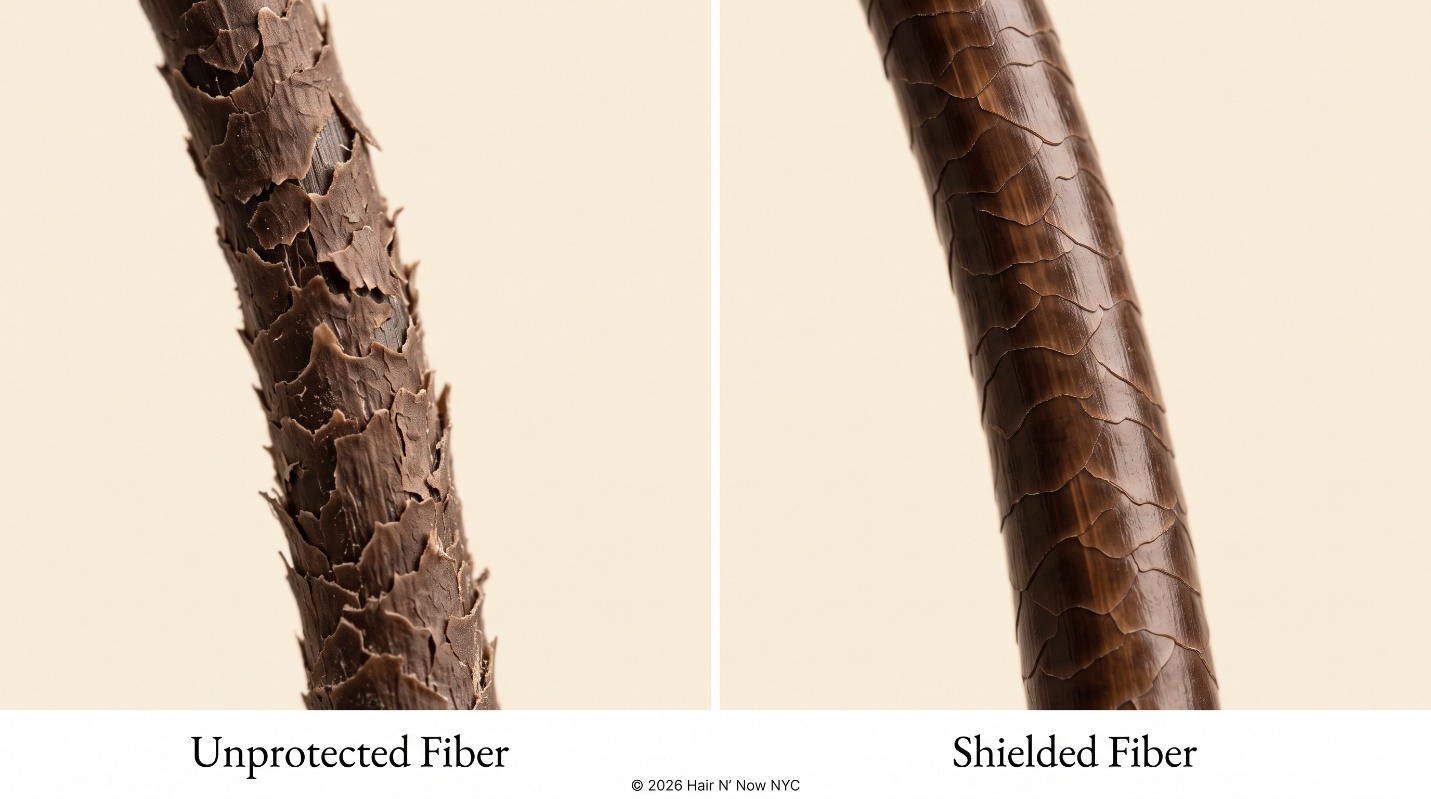
When chlorine disrupts them, the cuticle becomes more vulnerable.
The result can be increased dryness, roughness, and friction.
Chlorinated water can also contribute to damage within the hair fiber.
Research has found evidence of chlorine reaching the cortex.
There, it can affect proteins and other structures within the strand.
That matters because hair must tolerate repeated bending and stretching.
Healthy hair has some ability to absorb that mechanical stress.
Already-weakened hair has considerably less reserve.
That distinction is critical.
Chlorine May Expose Existing Weakness
Pool water does not affect every head of hair equally.
Previously lightened hair is particularly vulnerable.
So is hair that has been repeatedly colored or chemically treated.
Sun exposure can add another layer of seasonal stress.
Heat styling adds still more mechanical and thermal stress.
Then swimming introduces repeated exposure to chlorinated water.
Individually, these stresses may seem manageable.
Together, they can push weakened strands beyond their tolerance.
That is why breakage can appear suddenly.
The damage may have accumulated gradually.
The snapping simply becomes noticeable later.
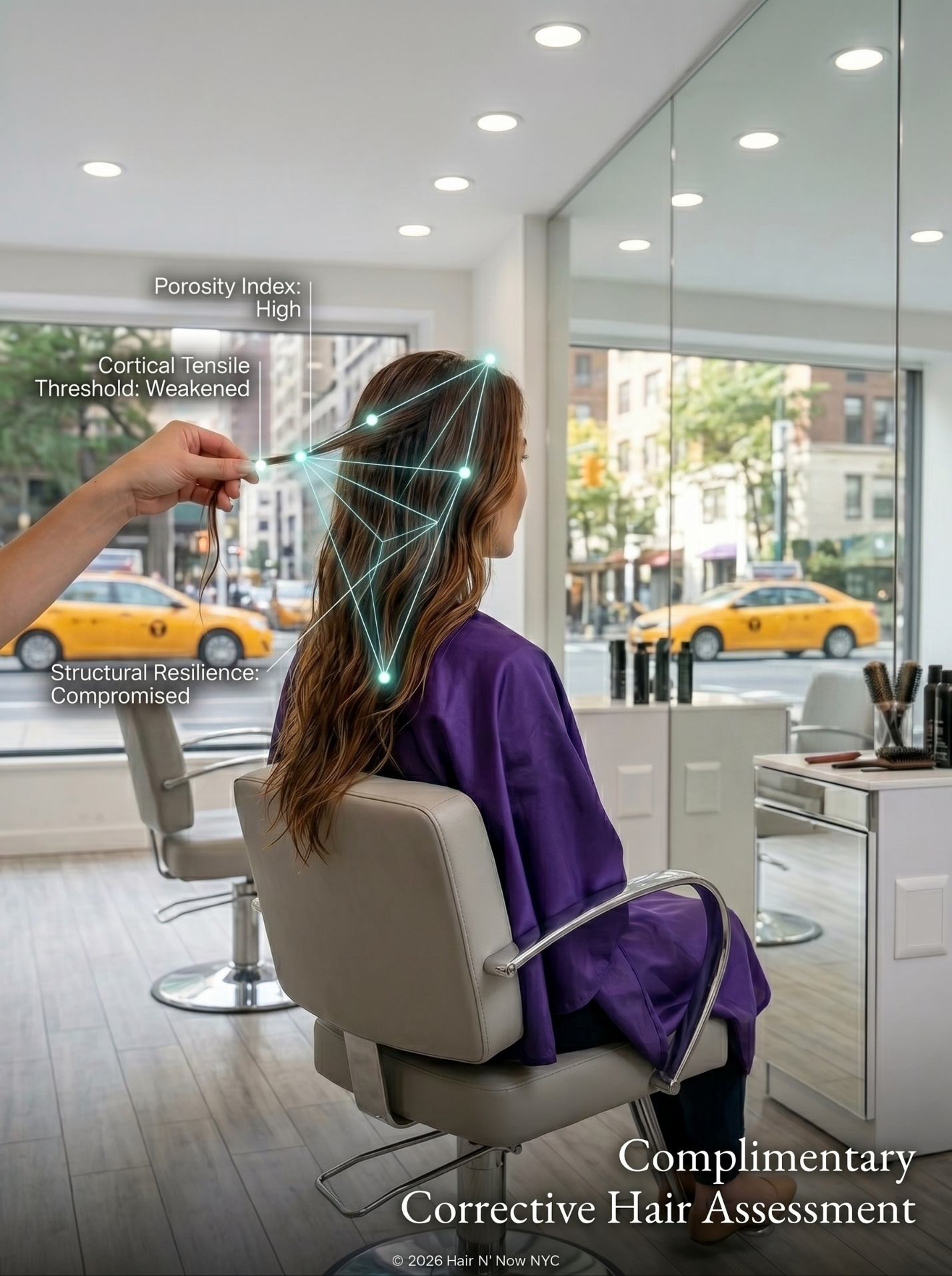
The Green Tint Misconception
Green hair gets much of the attention during pool season.
But chlorine itself is not the green pigment.
Copper is the more important culprit.
Copper can be present in pool water, including from certain treatments.
Damaged hair is more likely to accumulate that copper.
The result can be a greenish cast, especially on lighter color hair.
Chlorine still plays a role.
It can damage the cuticle and make the hair more receptive.
So, the better explanation is simple:
Copper creates the green. Chlorine helps create the opportunity.
A color-correcting shampoo may address the appearance.
It does not necessarily address underlying structural weakness.
That distinction matters more when your hair is already snapping.
The Wrong Way To Protect
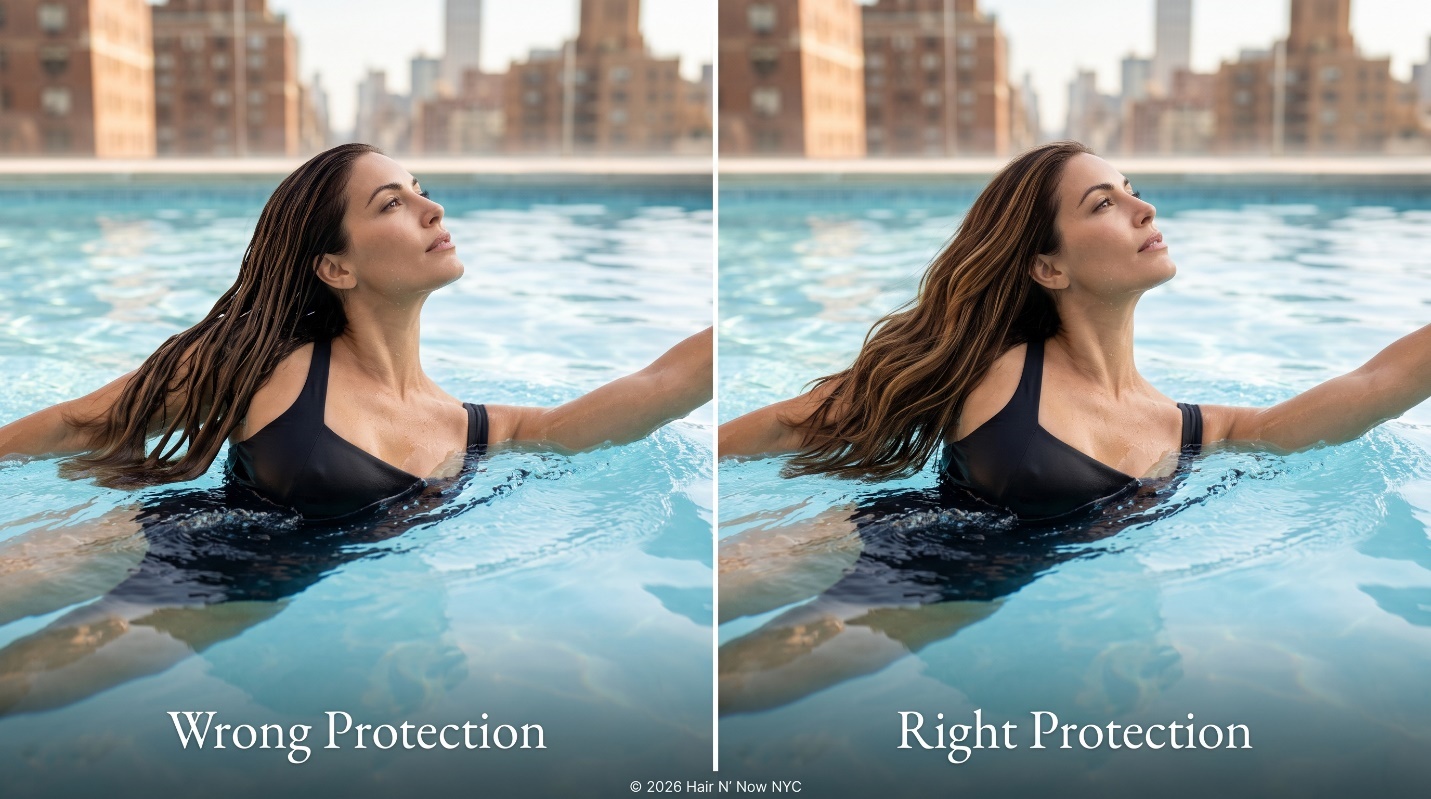
Many swimmers try to create a barrier before entering the pool.
That instinct is actually reasonable.
The problem is using too much of the wrong product.
A heavy coating can leave hair difficult to cleanse afterward.
It can also interfere with how subsequent products behave.
But completely avoiding pre-swim protection is not the answer.
Dermatologists recommend either a protective leave-in conditioner or oil.
The goal is to reduce direct contact with chlorinated water.
A swim cap provides an even stronger physical barrier.
The key is moderation.
Protect the hair without burying it under a heavy coating.
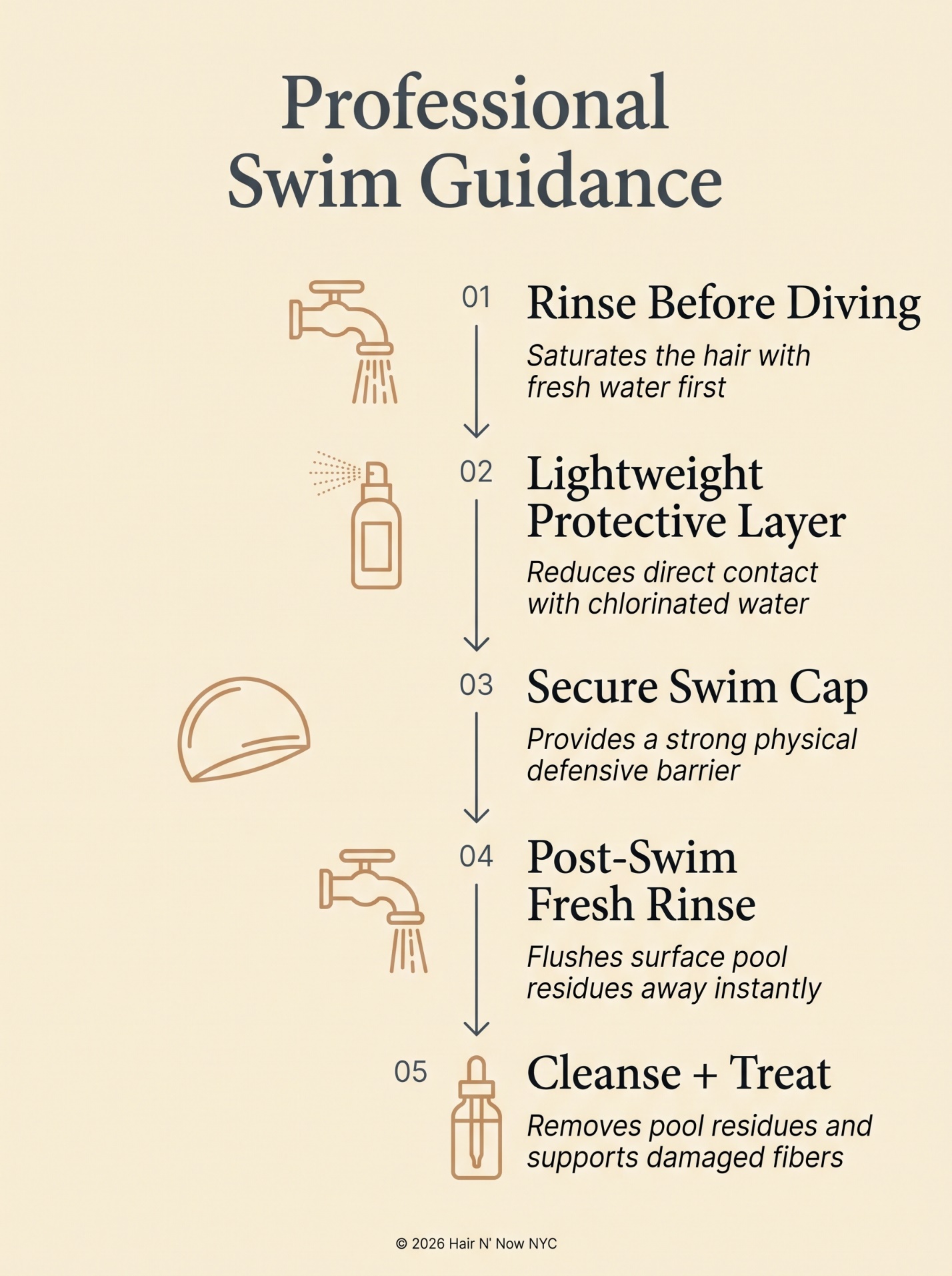
Professional Swim Guidance
Start with clean tap water.
Thoroughly wet your hair before entering the pool.
Wet hair absorbs less additional water than completely dry hair.
Then apply a lightweight leave-in conditioner or suitable protective product.
Focus particularly on the lengths and ends.
Wear a swim cap whenever practical.
After swimming, rinse your hair promptly with fresh water.
Do not let chlorinated water simply dry on the hair.
Then cleanse with a shampoo designed to remove pool-related residues.
Follow with a conditioning treatment appropriate for your hair’s condition.
The objective is simple:
Reduce exposure. Remove residue. Restore the hair’s surface.
Protection does not end when you leave the pool.
The most effective routine begins before you swim.
It continues through your swim and immediately afterward.
Listen To Your Hair’s Warnings
Your hair often reveals damage before you understand its cause.
Watch for these changes after repeated swimming:
- Hair snapping during gentle brushing
- Roughness when the hair is dry
- Excessive tangling when wet
- Increased frizz and loss of smoothness
- Ends that look thinner or more transparent
- Reduced elasticity
- More breakage around previously highlighted areas
These signs deserve attention.
They do not automatically prove that chlorine caused the damage.
Your stylist needs to consider the entire history.
That includes color, highlights, chemical services, heat exposure, sun exposure, and swimming frequency.
This is why diagnosis matters.
Moisture Is Not Always the Answer
One of the most common mistakes is treating every damaged strand as “dry.”
Dryness and structural weakness are not identical problems.
A moisturizing conditioner can improve softness and manageability.
It cannot reverse every form of fiber damage.
Likewise, a protein-focused treatment may not be appropriate for every head of hair.
Too much of any single treatment can create its own problems.
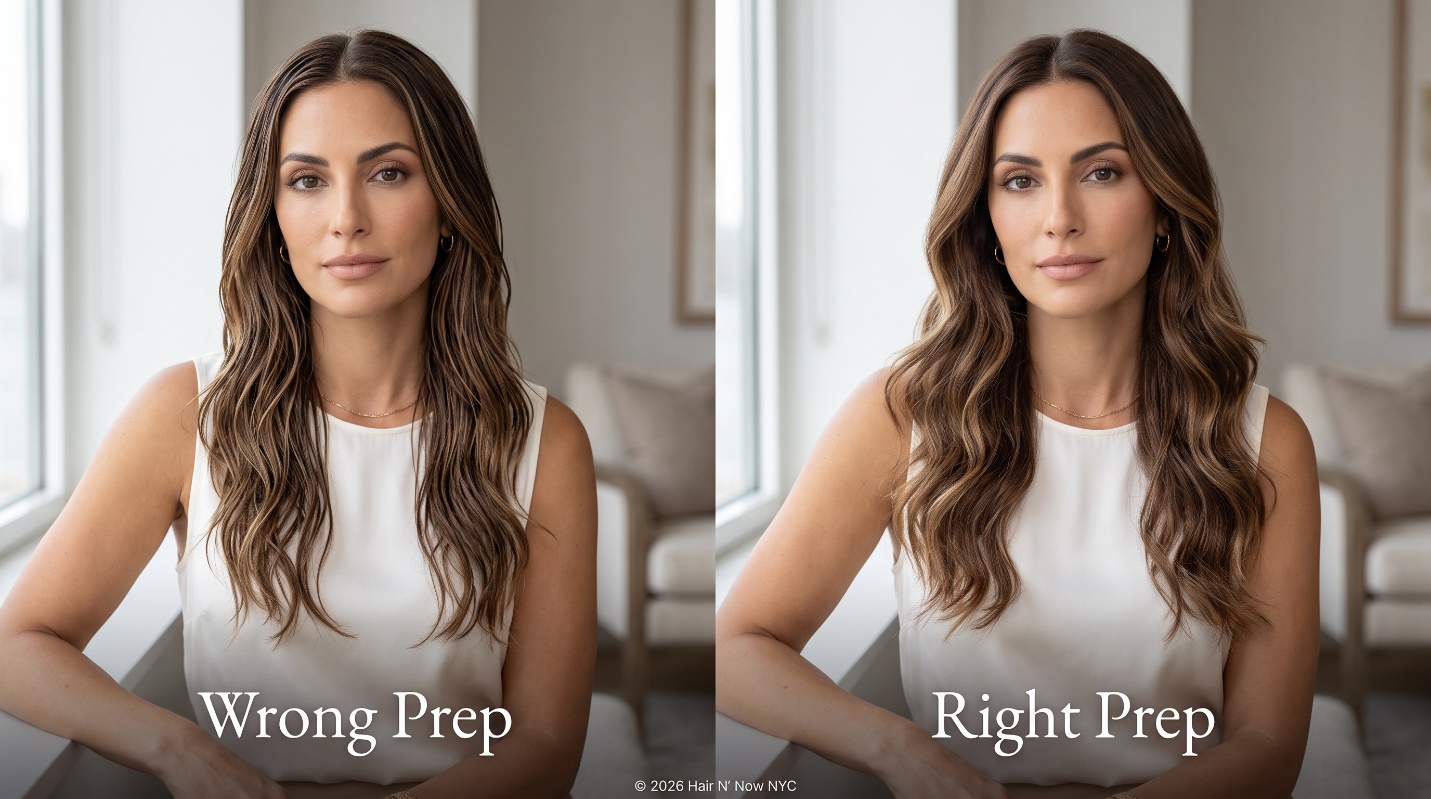
The right response depends on what your hair actually needs.
That is the difference between product shopping and professional diagnosis.
The Science of True Recovery
Think of your cuticle as a protective outer surface.
When that surface becomes damaged, friction increases.
Your hair becomes harder to detangle.
Mechanical stress then creates more opportunities for breakage.
Professional restorative services focus on improving the condition of that damaged fiber.
Depending on the diagnosis, treatment may involve conditioning agents or proteins.
It may also involve amino acids or other professional formulations.
These treatments can improve feel, manageability, and resilience.
But no treatment literally turns damaged hair back into virgin hair.
That distinction matters.
The goal is not to promise a miracle.
The goal is to improve the hair you have.
Then protect the new growth and remaining length from further damage.
The Professional Thinking Behind This
Every article begins with extensive research.
We compare multiple trusted professional sources.
We look for consistent areas of agreement.
We translate those findings into practical guidance.
Then we simplify the science without oversimplifying the problem.
Our goal is simple:
Help you make better hair decisions.
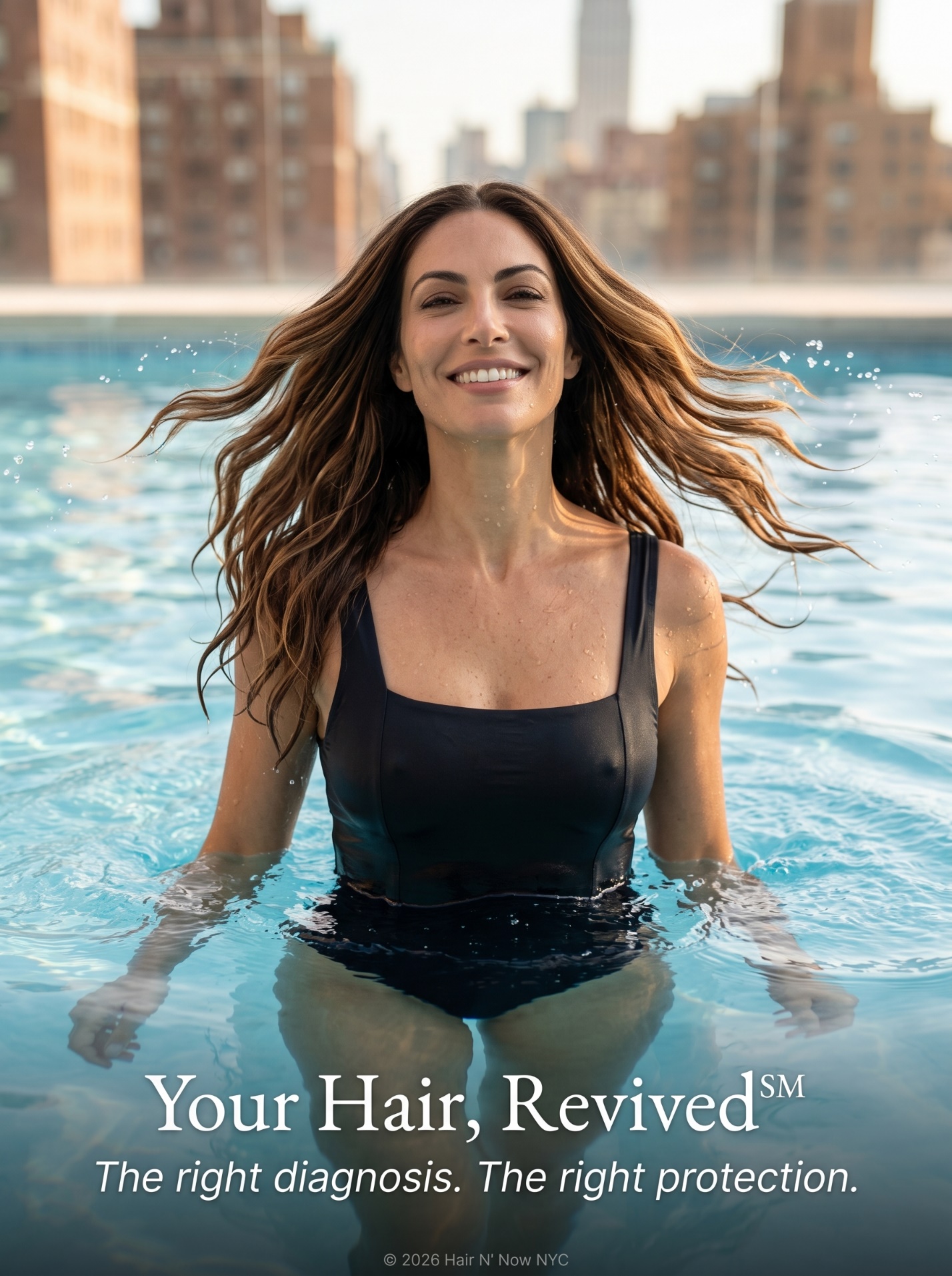
Your Hair, Revived℠
The right diagnosis. The right protection.
No two heads of hair respond identically to summer exposure.
Your previous color history matters.
So does your texture, styling routine, and swimming frequency.
Your hair may already have been compromised before pool season began.
That is why the same treatment may not suit every woman.
One client may need moisture.
Another may need structural support.
Another may simply need better protection and less cumulative stress.
The answer should come from the condition of your hair.
Not from some product currently trending online.
Complimentary Corrective Hair Assessment
If your hair is snapping, do not wait for more breakage.
A professional assessment can identify what your hair needs now.
Our expert stylists examine your hair’s current condition.
We look at elasticity, surface condition, porosity, and visible signs of damage.
We also consider your color history and daily styling habits.
Then we recommend a recovery approach suited to your hair.
Book a Complimentary Corrective Hair Assessment at Hair N’ Now NYC.
Discover what your hair needs before the damage goes further.
Explore our:
Click to call us at (212) 288-4413.
Or simply walk in.
Your 10028 hair stylist. Open seven days a week:
- Monday–Saturday: 8:00 AM–7:30 PM
- Sunday: 9:00 AM–7:00 PM