(Part 5 of 5 of our April Seasonal series)
Keywords: UES short haircuts · Yorkville hair salon
Hair N’ Now NYC | Your Hair, Revived℠
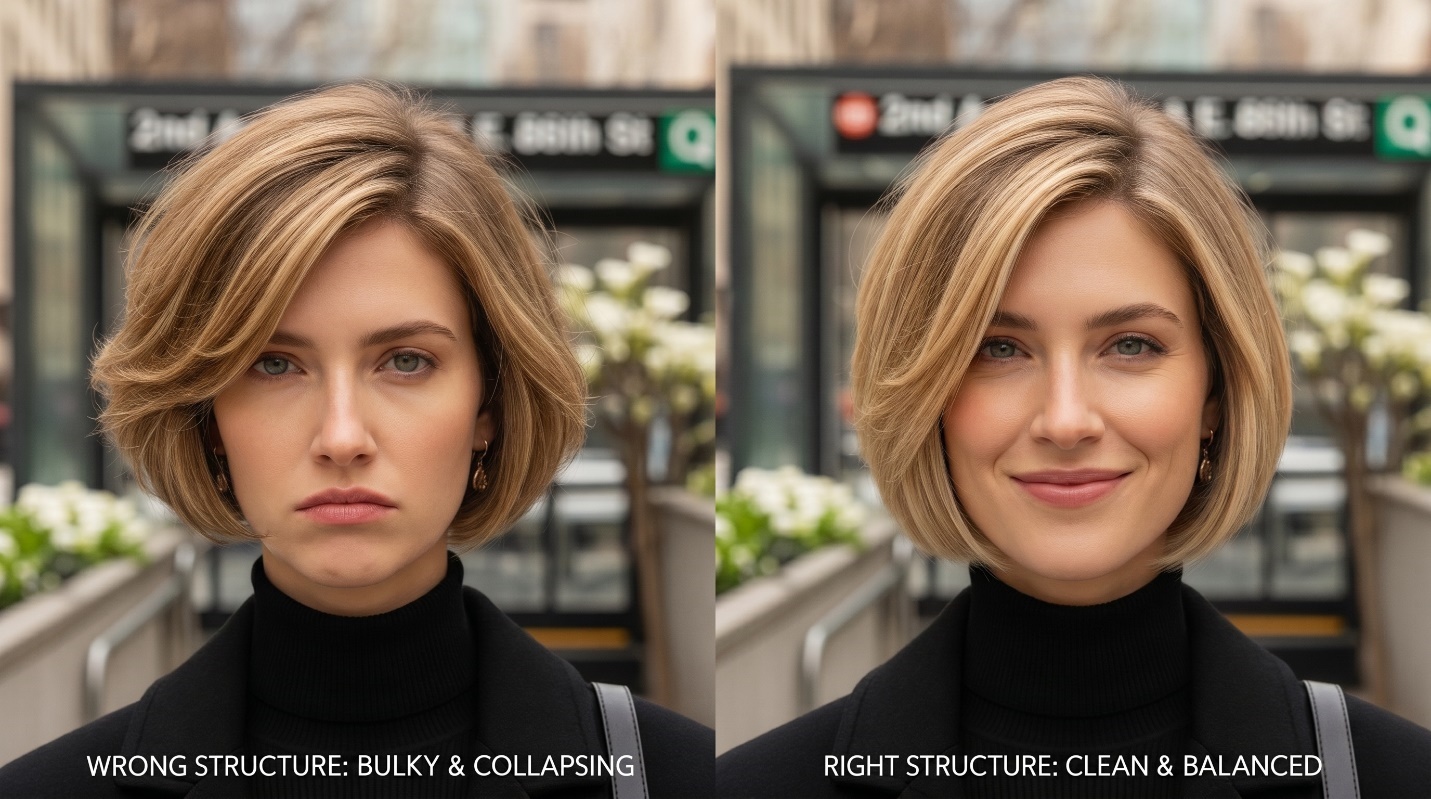
Short haircuts show everything, faster
There’s a moment clients don’t expect.
Their haircut is fresh. The mirror says it’s fine.
And yet — something feels… off.
Not wrong enough to fix immediately.
Yet, not right enough to ignore.
This is usually when concerned clients start Googling search terms like UES short haircut, or even fix bad haircut, trying to understand why a shorter style suddenly feels harder to manage.
It feels like a styling issue.
It isn’t.
It’s a structure issue.
At Hair N’ Now NYC, a Yorkville hair salon, we see it often: length is removed, but structure isn’t built in. Growth patterns are ignored. Weight is misplaced.
That’s why short hair grows weird faster.
And why true precision NYC haircuts behave differently from Day One.
Long haircuts hide mistakes, short haircuts can’t
Long haircuts conceal. Short haircuts reveal.
When length exists, imbalance diffuses. When it’s removed, every inconsistency becomes visible.
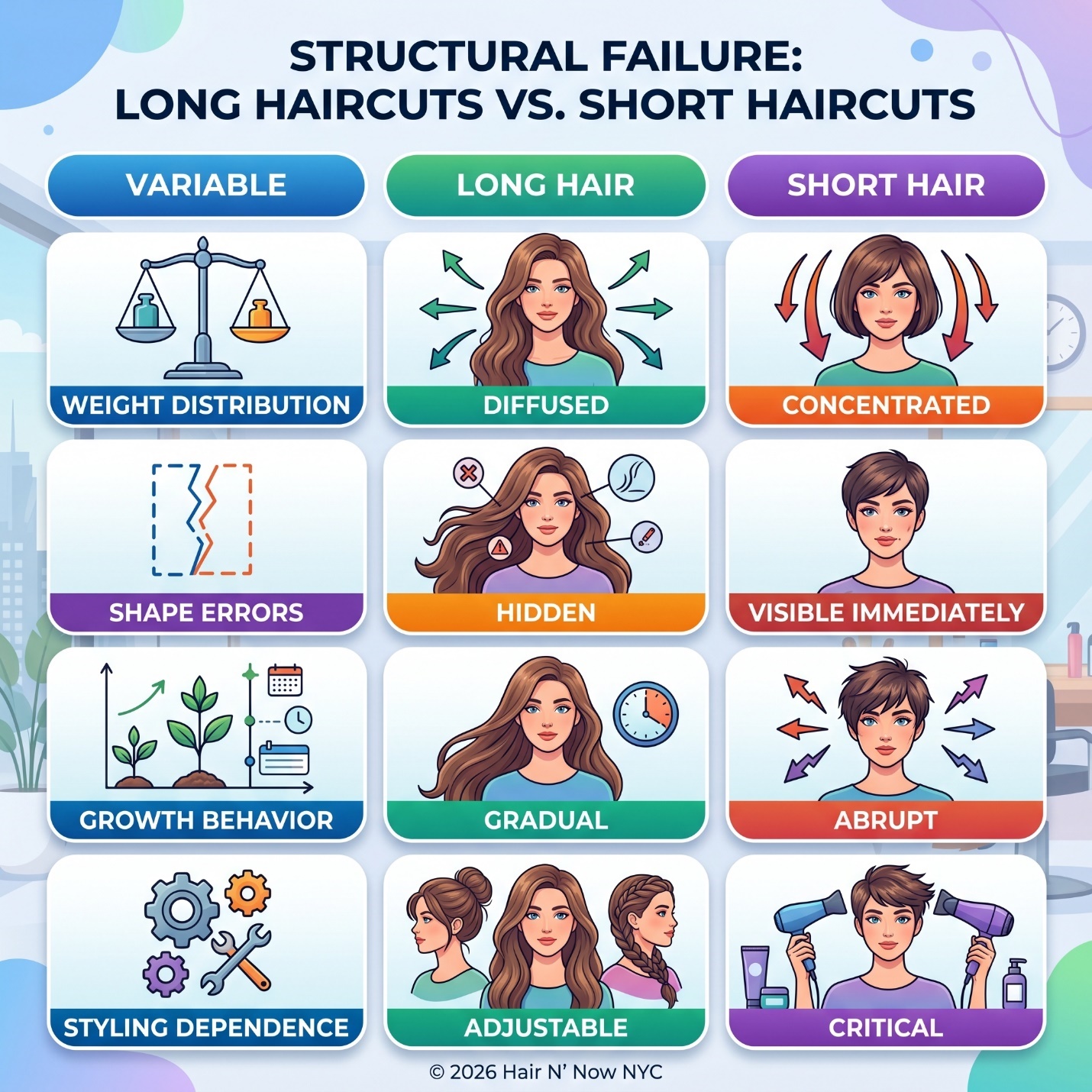
Short hair isn’t harder.
It’s simply less forgiving.
Most short haircuts aren’t actually designed
There’s a quiet industry truth.
Many short haircuts are:
- Copied
- Referenced
- Approximated
But not precision design engineered.
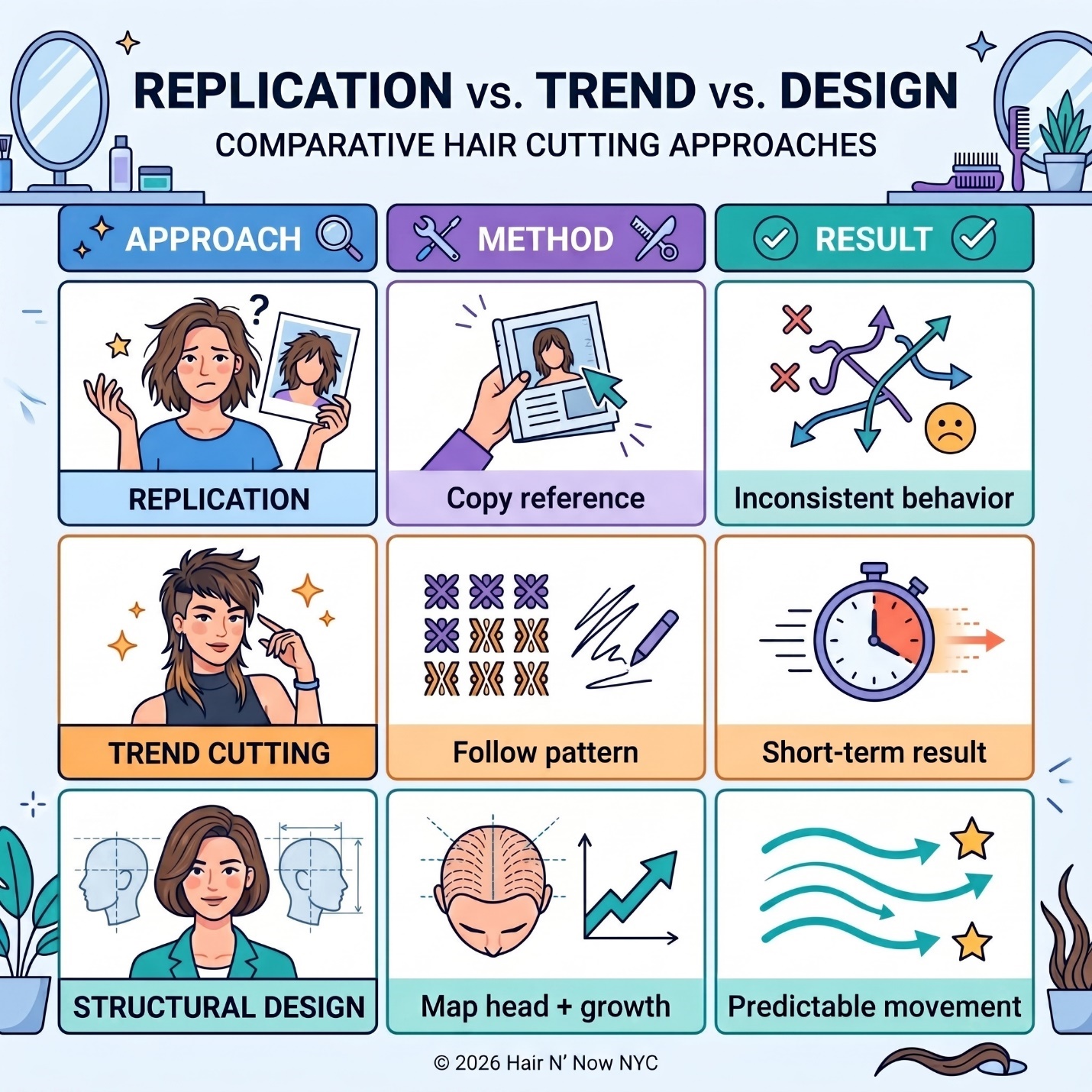
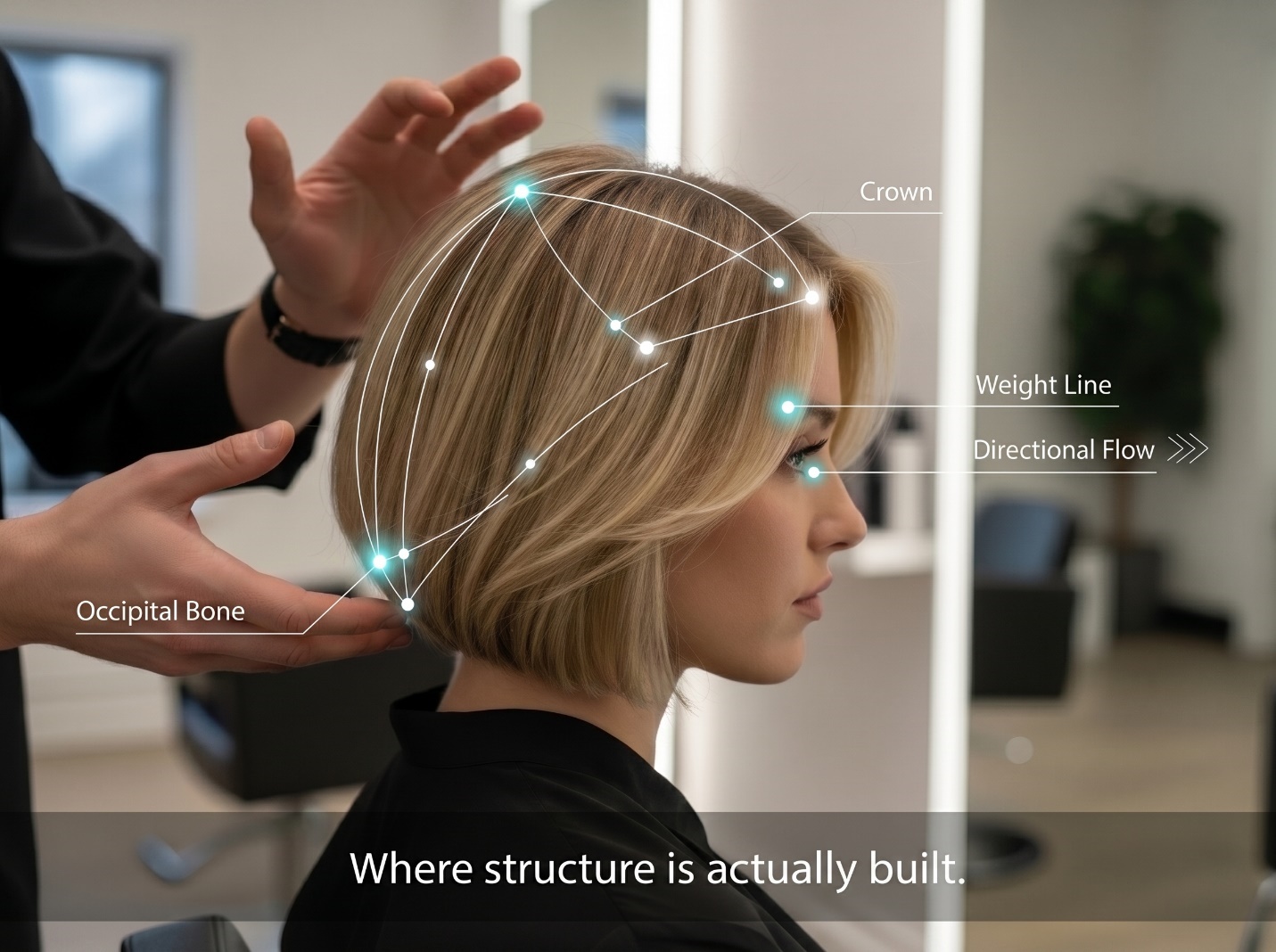
Structural design is invisible.
But it’s what holds everything together.
Hair grows out before it settles
“It looked fine… then it didn’t.”
That’s not styling failure.
That’s structural failure exacerbated over time.
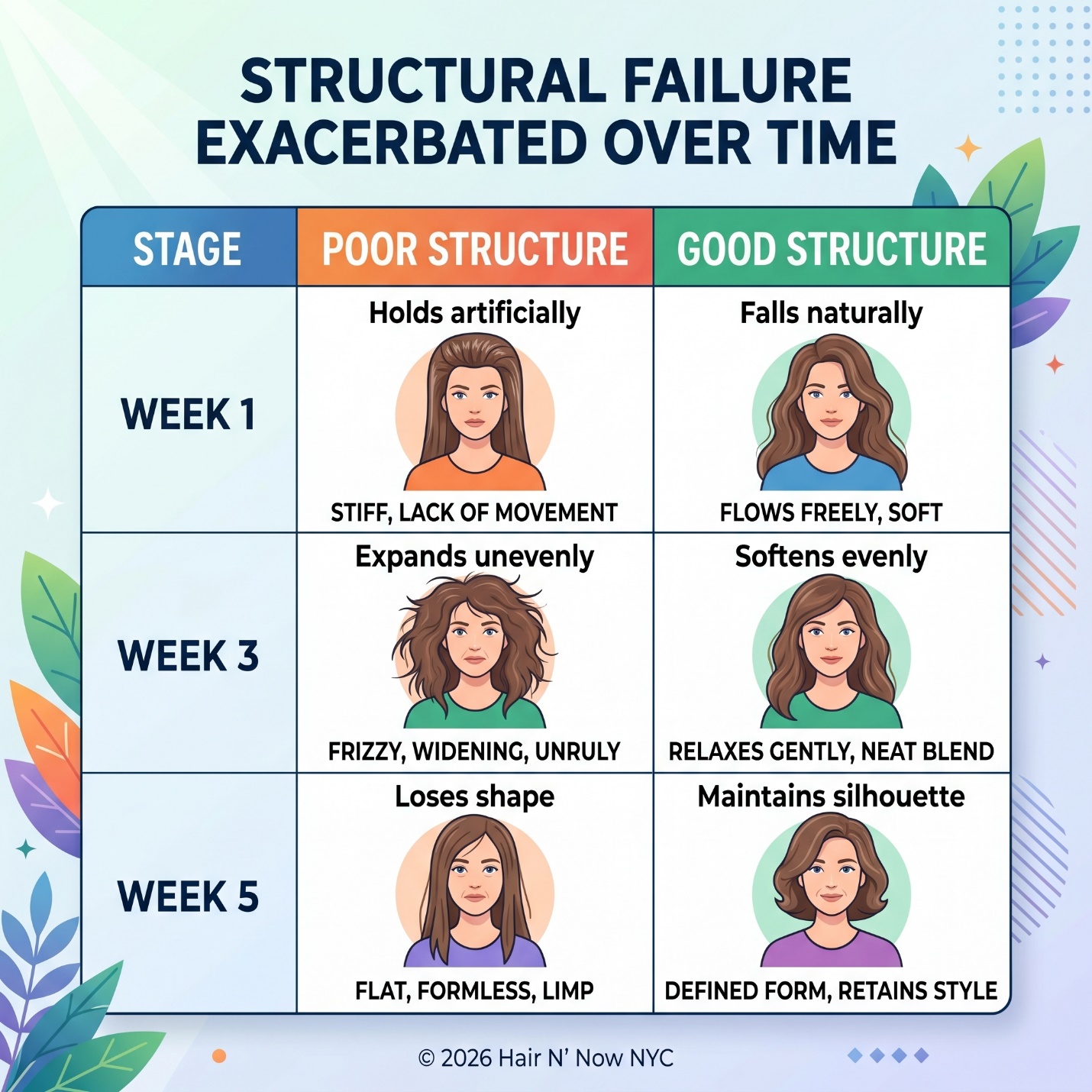
Short hair doesn’t grow wrong.
It exposes what wasn’t designed.
Faster.
Key Insight
If your short haircut feels harder to manage than expected, it’s rarely about styling — it’s usually the structure underneath it.
The right cut should work with you, not against you.
Structure is what you feel, not see.
Structure isn’t visual.
It’s tactile.
It lives in:
- Internal layering
- Weight placement
- Balance
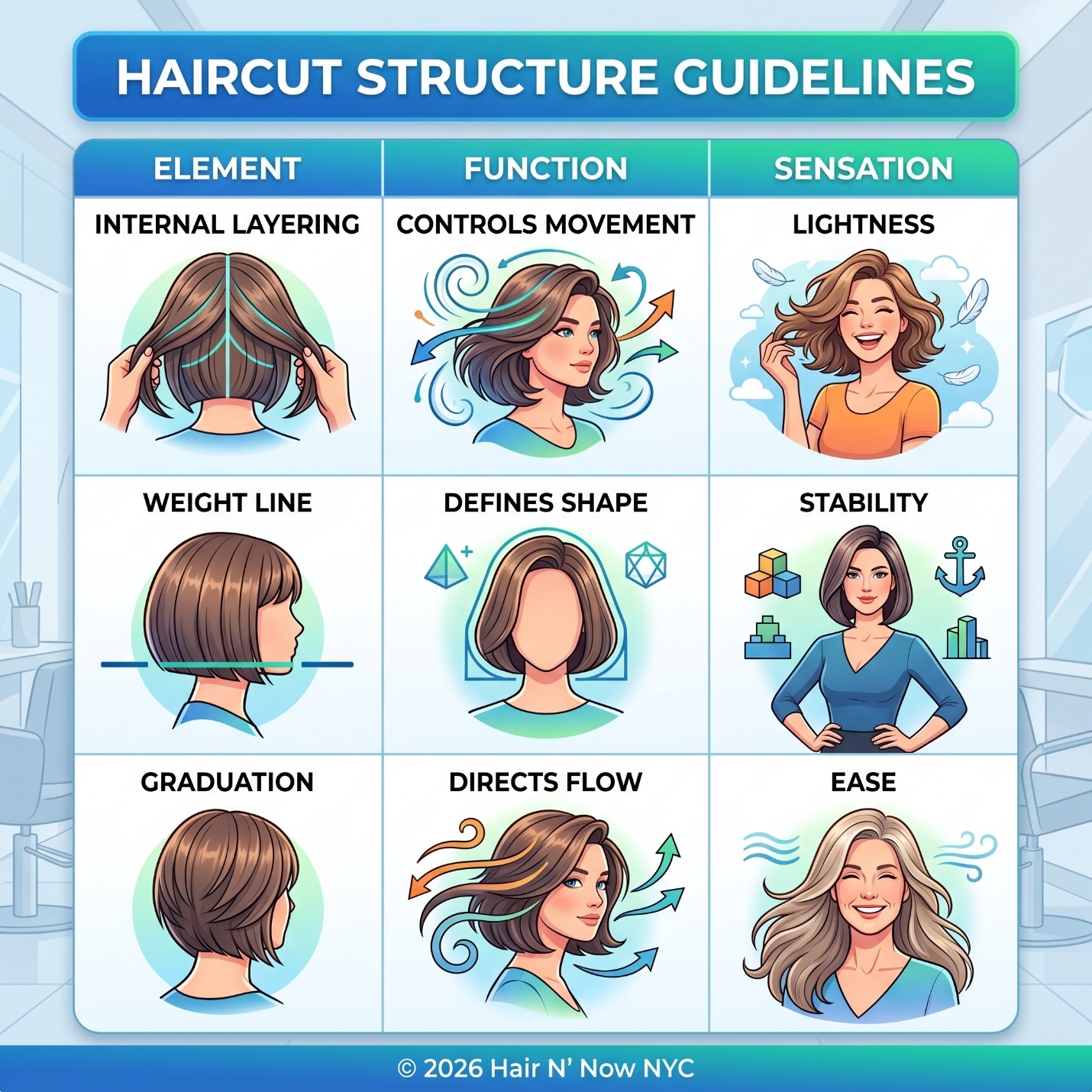
The wrong cut will throw off your routine.
Morning friction is a diagnostic.
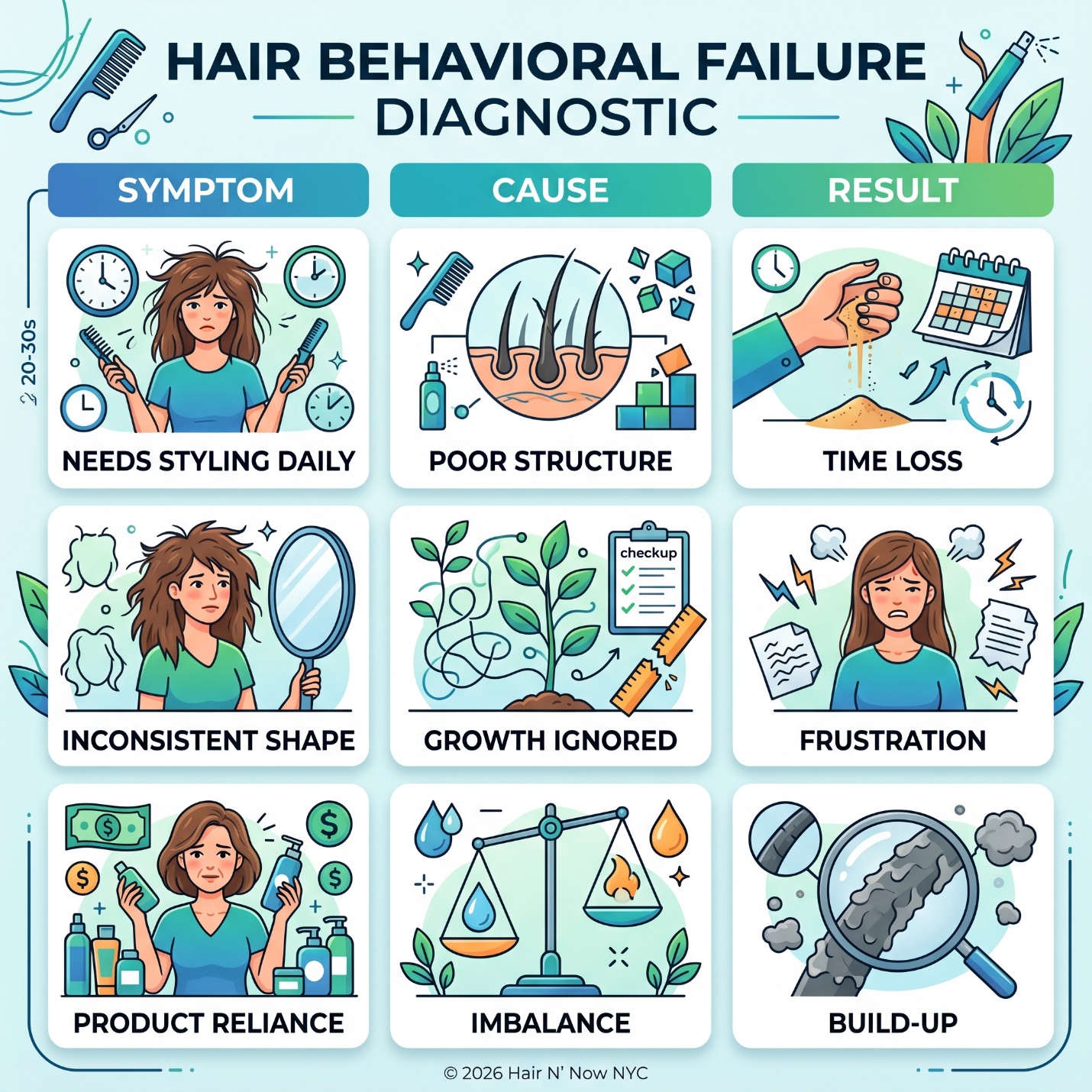
Effort and time required increases when structure is missing.
Good structure makes styling optional.
This is the shift.
From:
Styling supporting the cut
To:
The cut supporting itself
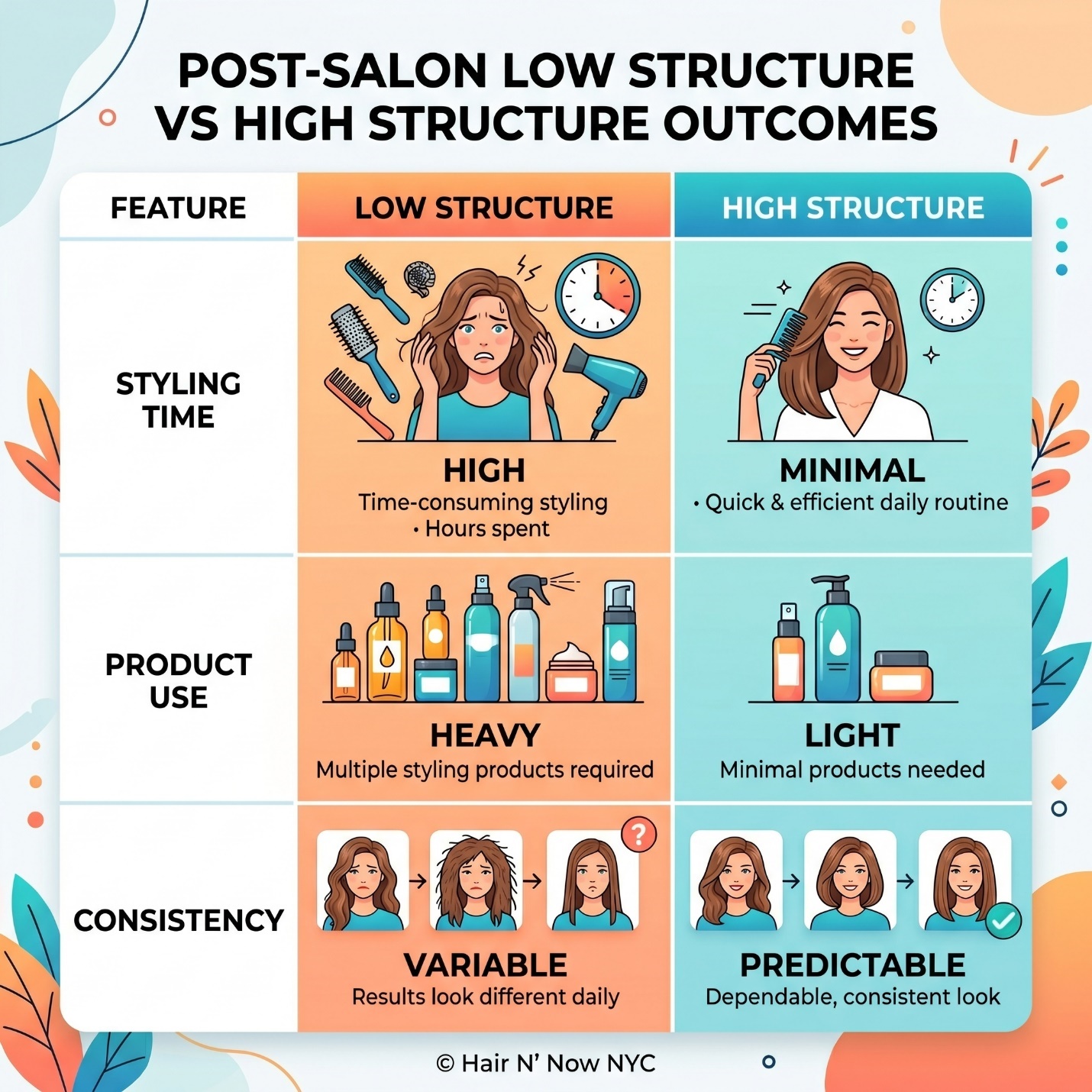
Revived hair moves without effort
The goal isn’t just appearance.
It’s behavior.
Hair that:
- Falls into place
- Responds naturally
- Holds shape
The best results don’t announce themselves. They simply feel right — consistent with the “quiet correction” principle seen in color work.
In-Salon Elegance Cycle
Short hair doesn’t follow a calendar.
It follows behavior.
The clients whose hair always “works” aren’t styling more.
They’re maintaining structure before imbalance becomes visible.
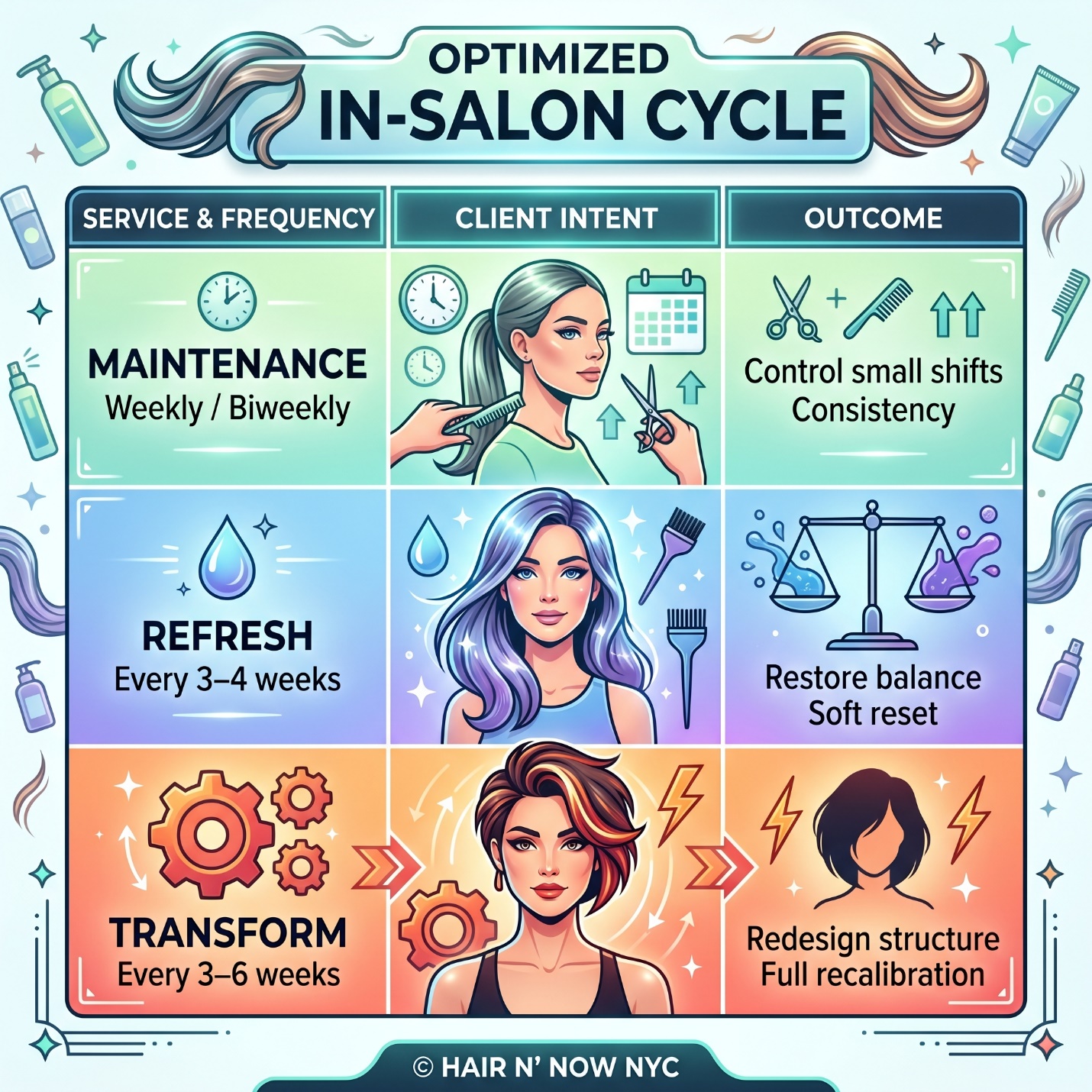
How the elegance cycle functions
Maintenance: Weekly / Biweekly
Small adjustments that prevent drift:
- Fringe trims
- Edge clean-up
- Micro-weight control
Signal: consistency without daily effort
Refresh: 3–4 Weeks
Where clients feel the difference:
- Movement restored
- Shape rebalanced
- Internal structure refined
Signal: “It’s starting to feel off.”
Transform: 3–6 Weeks
Precision redesign:
- Shape recalibration
- Weight redistribution
- Growth correction
Signal: “This needs to be right again.”
Structure isn’t maintained by chance.
It’s maintained by timing.
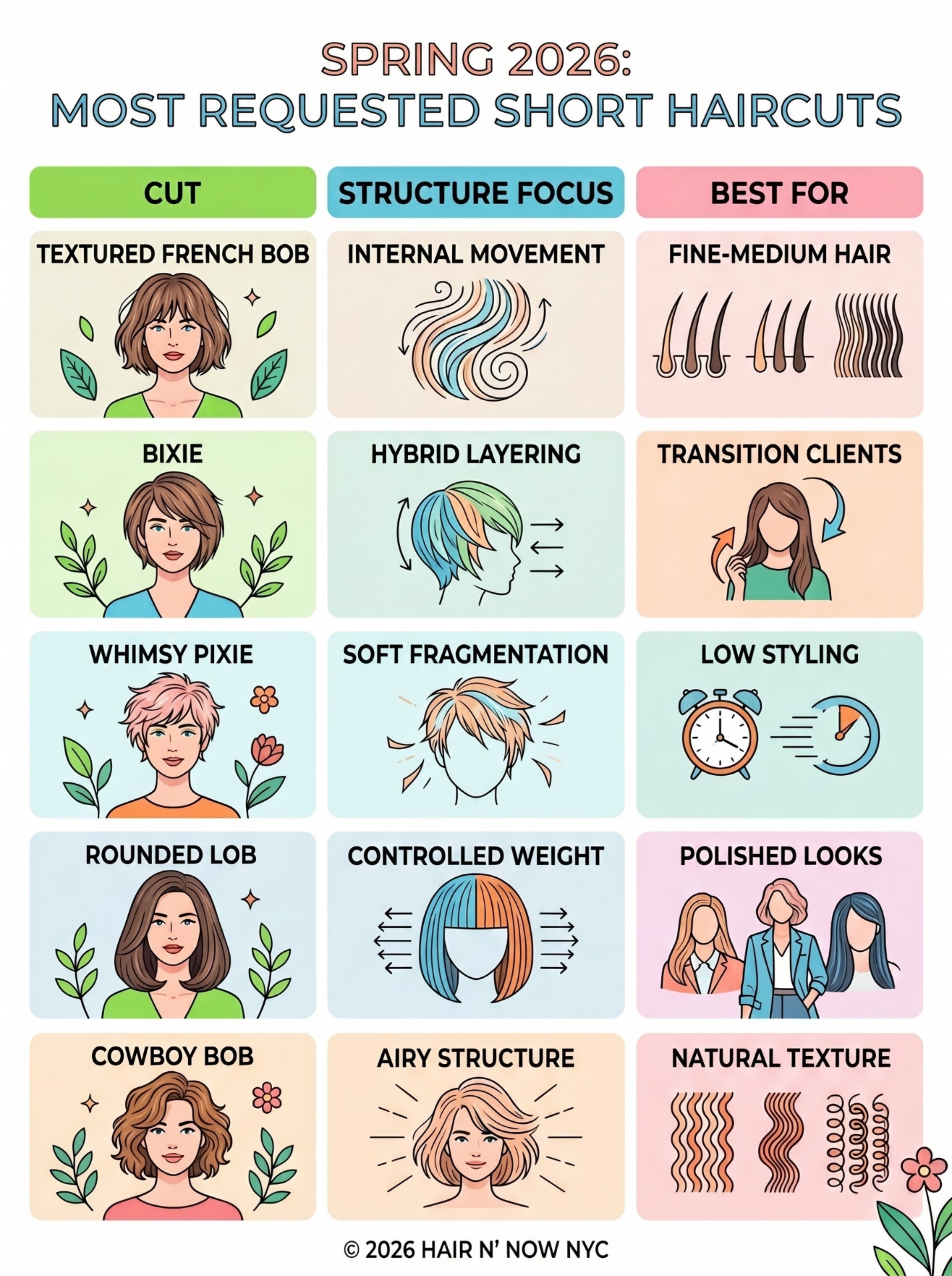
Spring 2026: Most Requested Short Haircuts

Textured French Bob
This chic, chin-length cut features soft, shattered ends and subtle layers for effortless movement. Blending classic Parisian elegance with modern grit, it emphasizes natural volume and lived-in texture. Usually paired with brow-grazing bangs, it offers a sophisticated yet rebellious silhouette that requires minimal daily styling.

Bixie
A daring hybrid between a bob and a pixie, this style offers the shaggy length of a bob with the airy, cropped layers of a pixie. It provides significant versatility, allowing for face-framing softness while maintaining a bold, edgy shape that highlights the cheekbones and neck.

Whimsy Pixie
This ethereal take on the classic pixie uses delicate, wispy layering to create a soft, feather-like appearance. Eschewing harsh lines, it focuses on movement and light texture around the ears and forehead. The result is a playful, feminine look that feels weightless and incredibly romantic.

Rounded Lob
Falling just above the shoulders, this long bob utilizes internal graduation to create a soft, curved silhouette. The ends turn slightly inward, framing the face with a smooth, polished finish. It’s an ideal choice for those seeking a balanced, voluminous shape that looks timelessly elegant.

Cowboy Lob
Inspired by rugged, Western aesthetics, this shoulder-skimming cut features heavy texture and choppy, face-framing layers. It embraces a tumbled, wind-swept look with plenty of grit and movement. The style feels intentional yet unpolished, offering a cool, utilitarian vibe that works perfectly with natural waves.
Pro Tips About Products
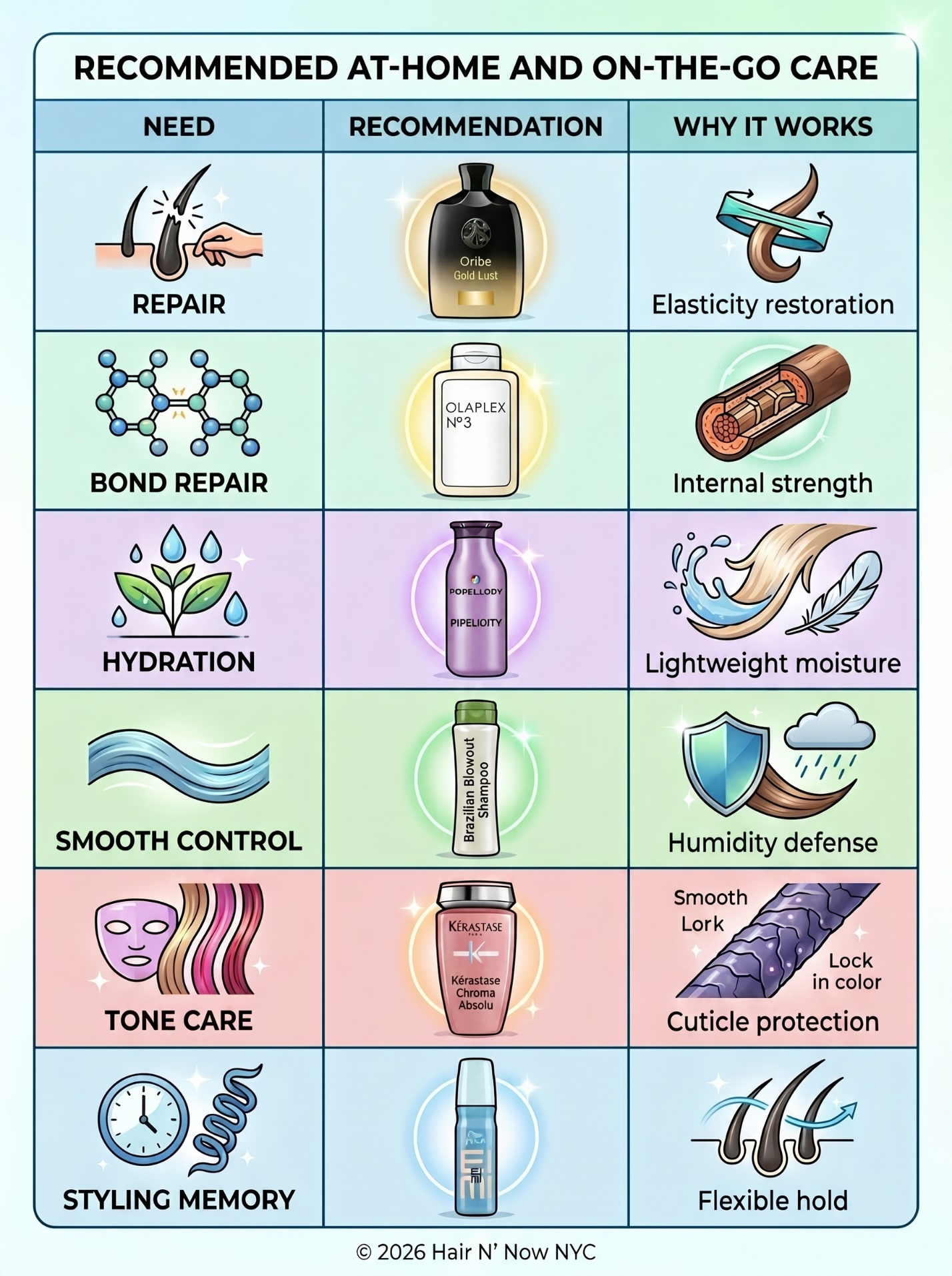
Recommended At-Home and On-the-Go Care
|
Need |
Recommendation |
Why It Works |
|---|---|---|
|
Repair |
Oribe Gold Lust |
Elasticity restoration |
|
Bond repair |
Olaplex No.3 |
Internal strength |
|
Hydration |
Pureology Hydrate |
Lightweight moisture |
|
Smooth control |
Brazilian Blowout Shampoo |
Humidity defense |
|
Tone care |
Kérastase Chroma Absolu |
Cuticle protection |
|
Styling memory |
Wella EIMI |
Flexible hold |
Frequently Asked Questions About Short Haircuts
We hear these every day, from clients in our 9 chairs.
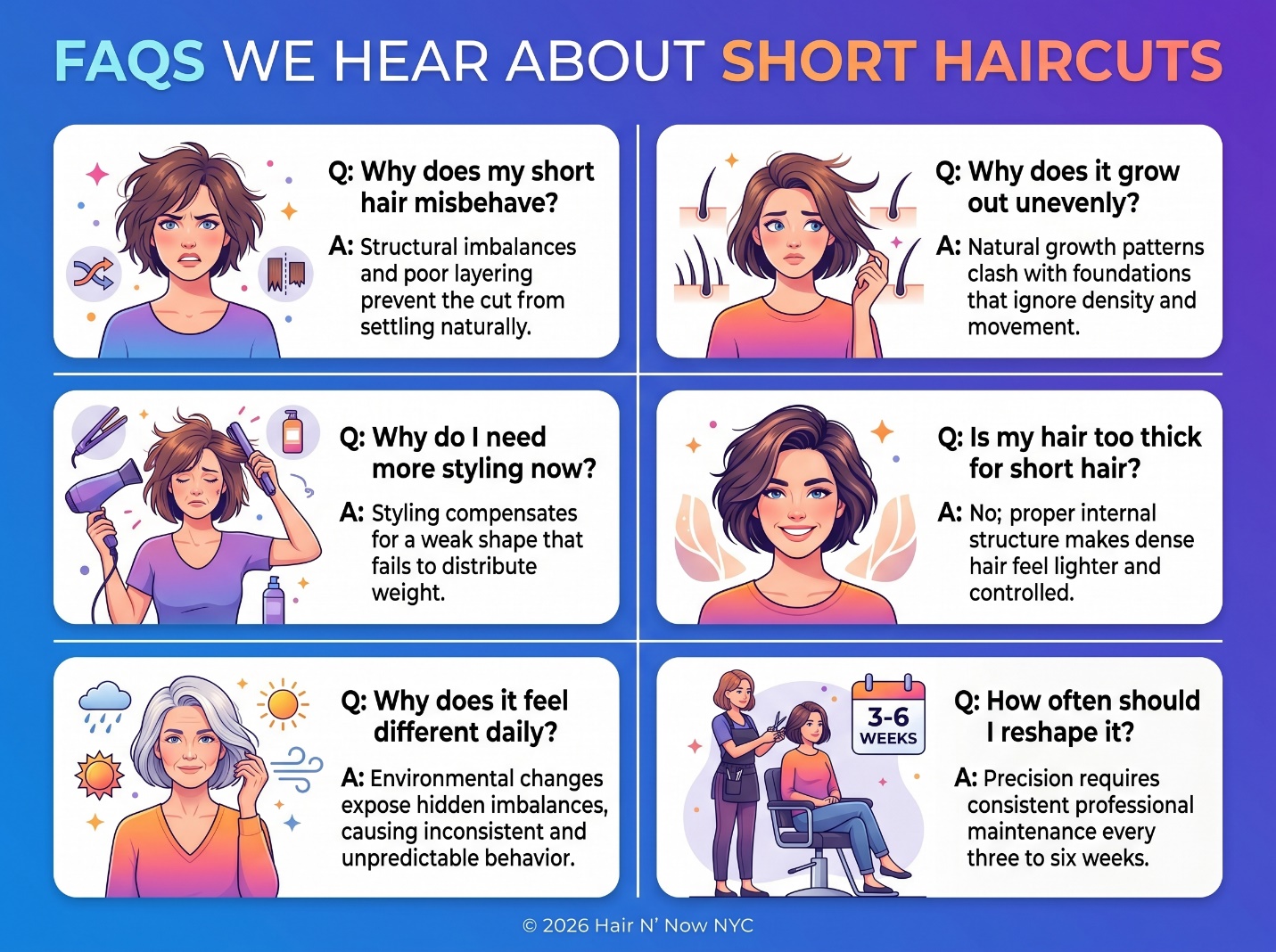
Why does my short hair misbehave?
Short hair exposes structural imbalance immediately because there is no length to mask technical errors. Without proper layering, strategic weight distribution, and alignment to your specific growth patterns, the cut simply won’t settle naturally. What feels like daily styling difficulty is actually a design issue underneath, not your technique.
Why does it grow out unevenly?
Uneven grow-out typically reflects how your natural growth direction interacts with the haircut’s foundation. If the initial structure failed to account for hair density or movement, the expansion becomes irregular over time. A well-designed cut anticipates these shifts, allowing the shape to evolve smoothly rather than distorting into something messy.
Why do I need more styling now?
When the haircut’s structure isn’t doing the heavy lifting, styling must compensate for the lack of built-in shape. You likely find yourself rebuilding that silhouette every morning. Proper structure distributes weight so the hair falls into place naturally, significantly reducing effort and making intense daily styling an option instead of a necessity.
Is my hair too thick for short hair?
Thickness is rarely the barrier; the real issue is how that volume is distributed. Without precise layering, dense hair becomes heavy, blocky, and resistant to movement. However, with the right internal structure, thick hair actually performs better short—feeling much lighter, more controlled, and significantly easier to manage than long hair.
Why does it feel different daily?
Inconsistency usually signals a hidden imbalance within the haircut. Environmental changes like humidity or wind quickly expose structural weaknesses, causing unpredictable behavior throughout the day. A well-balanced cut maintains high consistency across various conditions, ensuring your hair looks great whether you choose to air-dry it or use light styling products.
How often should I reshape it?
Short hair requires consistent refinement because its structural integrity is quite precise. Most clients find the greatest benefit from professional maintenance every 3 to 6 weeks, perhaps with smaller adjustments in between. Waiting too long allows internal imbalance to build, which eventually makes the necessary corrective cuts much more involved.
Sources of Consensus
Hair Stylist Industry Expertise
- Above Shears, Why Some Haircuts Lose Shape Quickly.
- TheSalonGuy (YouTube), Why Your Layers Never Look Right (Stylists Get This Wrong).
- Sam Villa Hair, Foundations of Haircutting.
Editorial & Lifestyle Authorities
- Allure, The Spring Haircut and Color Trends of 2026.
- InStyle, 10 Short Hair Ideas That Scream Spring, From the Cowboy Bob to a Textured Pixie.
- Stylist (UK), The golden rules of caring for short hair.
- Vogue Beauty, A Guide to Romancemaxxing Your Hair for Spring.
Scientific & Behavioral Context
- Behavioral Failure Studies — Analysis of “Morning Friction”: Supports our Post-Salon Low Structure vs. High Structure Outcomes view that poor structural integrity leads to increased mechanical stress and product buildup.
- Temporal Growth Research — Studies on hair density and directional expansion: Confirms why “Good Structure” softens evenly while “Poor Structure” distorts into an unmanageable shape by Week 3.
Your Hair, Revived℠

Short hair isn’t about taking length off.
It’s about putting structure in.
Book a consultation at Hair N’ Now NYC — and start with the right foundation.
Book a FREE 15-minute Hair Consultation online now. Or just click-to-call us at (212) 288-4413 now to schedule your session. Or feel free to walk-in to Hair N’ Now NYC if you’re in the neighborhood.
We’re here seven days a week — Monday through Saturday from 8:00 AM to 7:30 PM, and Sundays from 9:00 AM to 7:00 PM. Superbusy schedule? We design cuts that grow out cleanly. How? We diagnose, then execute. And that’s why the result doesn’t just look better. It behaves better, longer.